Spider Silk Bio-Steel: Genetically Edited Silk Threads Surpass the Strength of Special Steel

Aug 27, 2025 By

In a groundbreaking development that reads like science fiction, researchers have successfully engineered silkworms to produce spider silk proteins through advanced genetic modification, resulting in a material with strength properties surpassing that of specialty steel. This remarkable achievement represents not just a leap in materials science but a fundamental shift in how we approach sustainable high-performance material production.

The quest for stronger, lighter, and more sustainable materials has long driven scientific innovation. For decades, materials scientists have looked to nature for inspiration, particularly to spider silk, which possesses an extraordinary combination of strength, flexibility, and lightness. Spider silk has a tensile strength comparable to high-grade steel while being significantly less dense and remarkably elastic. However, farming spiders for their silk has proven commercially unviable due to their territorial nature and low yield.

Enter the humble silkworm - nature's most efficient silk producer. For thousands of years, humans have domesticated silkworms for their luxurious filament, but natural silk, while valuable for textiles, lacks the mechanical properties of spider silk. The research breakthrough came when scientists successfully inserted genes responsible for spider silk protein production into silkworms, creating transgenic organisms that combine the production efficiency of silkworms with the material properties of spider silk.

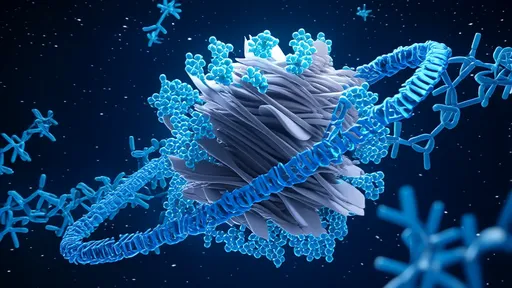
The genetic engineering process represents a marvel of modern biotechnology. Researchers identified and isolated the specific genes in spiders that code for the strongest silk proteins, particularly those from the golden orb-weaver spider, known for producing some of nature's toughest silk. Using advanced CRISPR-Cas9 gene-editing techniques, scientists then precisely inserted these genes into silkworm embryos at locations that would ensure the spider silk proteins would be properly expressed and integrated into the silkworm's natural silk production system.

What makes this achievement particularly remarkable is that the modified silkworms not only produce the spider silk proteins but properly assemble them into fibers with the same complex hierarchical structure that gives natural spider silk its exceptional properties. The resulting composite material maintains the production scalability of traditional silk while achieving mechanical properties previously only found in spider silk.

The mechanical testing results have astonished materials scientists. The engineered silk demonstrates a tensile strength of approximately 2.0 GPa, significantly exceeding that of specialty steel alloys (which typically range from 0.5 to 1.5 GPa) while being only one-sixth the density. This gives the material a specific strength (strength-to-density ratio) nearly ten times greater than steel. Additionally, the engineered silk maintains the impressive elasticity of natural spider silk, able to stretch up to 40% of its length without breaking, compared to steel's typical 0.2-2% elongation at break.

The applications for this super-strong biological material are vast and transformative. In the medical field, it could revolutionize surgical sutures, tissue engineering scaffolds, and artificial ligaments. Its biocompatibility and gradual biodegradability make it ideal for implants that need to provide temporary structural support as the body heals. The material's strength and flexibility could lead to better prosthetic devices and improved wound closure systems.

In aerospace and automotive industries, the material's exceptional strength-to-weight ratio could lead to lighter, more fuel-efficient vehicles and aircraft. Composites reinforced with this engineered silk could replace carbon fiber in many applications while being more sustainable and environmentally friendly. The material's ability to absorb energy makes it promising for impact-resistant structures and safety equipment.

The military and protective equipment sectors are particularly interested in this development. The material could lead to lighter, more flexible body armor that provides better protection than current Kevlar-based systems. Its potential for energy absorption could improve helmet technology, reducing traumatic brain injuries among soldiers and athletes alike. The material's thermal stability and strength retention across a wide temperature range make it suitable for various extreme environment applications.

Perhaps most significantly, this engineered silk represents a sustainable alternative to many synthetic high-performance materials. Traditional steel production is energy-intensive and generates significant carbon emissions. Synthetic polymers often derive from petroleum and present environmental persistence problems. In contrast, this bio-based material production relies on silkworms feeding on mulberry leaves, a renewable resource, with the entire process having a much lower environmental footprint.

The production scalability appears promising. Silkworms have been cultivated for silk production for millennia, with established infrastructure and expertise worldwide. A single silkworm cocoon can yield up to 1,500 meters of continuous filament, and the insects can be raised efficiently in controlled environments. The genetic modification doesn't affect the worms' viability or reproduction, meaning production could be scaled using existing sericulture frameworks.

Despite the excitement, researchers caution that commercial production still faces challenges. Ensuring consistent quality and properties across production batches requires further refinement. The extraction and processing methods need optimization to handle the stronger fibers without damaging them. Regulatory approval for various applications, particularly medical uses, will require extensive testing and documentation.

The research teams are now working on further enhancements, including modifying the silk proteins to incorporate additional functional properties such as conductivity, antimicrobial activity, or specific biological recognition sites. Some groups are experimenting with altering the amino acid sequences to create variants with even greater strength or specialized properties for particular applications.

This breakthrough also opens new possibilities for biological manufacturing more broadly. The success of engineering silkworms to produce foreign proteins suggests that other organisms could be similarly modified to produce valuable materials, potentially leading to a new era of bio-based manufacturing where everything from construction materials to electronics components could be grown rather than manufactured through energy-intensive processes.

The ethical considerations are being carefully addressed. The genetic modifications are designed to not cause harm to the silkworms, and containment protocols ensure that modified organisms do not enter the natural ecosystem. The research teams are working with bioethicists to establish guidelines for this new field of biological materials production.

As development continues, partnerships are forming between research institutions and industrial partners to accelerate commercialization. Several startups have already emerged focused specifically on developing applications for this engineered silk, attracting significant investment from venture capital firms and established materials companies looking to diversify into sustainable alternatives.

The scientific community recognizes this achievement as a milestone in convergent research, where genetics, materials science, and engineering combine to create solutions that no single discipline could achieve alone. The successful marriage of spider silk genes with silkworm production capabilities demonstrates the power of interdisciplinary approaches to solving complex material challenges.

Looking forward, researchers believe this is just the beginning. The same principles could be applied to enhance other natural materials or create entirely new biological materials with properties not found in nature. Some envision a future where designed proteins enable materials that self-assemble, self-repair, or adapt to environmental conditions - all produced sustainably through biological systems.

This spider-silk supermaterial from genetically modified silkworms stands as a testament to human ingenuity's ability to learn from and improve upon nature's designs. It offers a vision of a future where high-performance materials don't come from smelters or chemical plants but from living organisms working in harmony with their environment, potentially transforming everything from medicine to manufacturing while reducing our ecological footprint.
Recommend Posts
Biology

Insect 'Titanium Alloy Joints': The Super-Elastic Protein Structure of Flea Jumping Legs"

By /Aug 18, 2025

In the intricate world of biomechanics, few natural phenomena rival the astonishing jumping ability of fleas. These tiny insects, often measuring just a few millimeters in length, can launch themselves distances up to 200 times their body length. For decades, scientists have marveled at this capability, but recent breakthroughs have revealed the true marvel behind their power: an ultra-resilient protein structure in their legs that behaves like a biological titanium alloy.
Biology

Plant Intelligent Navigation System: Electromagnetic Induction Mechanism for Root Water Seeking

By /Aug 27, 2025

In the quiet, hidden world beneath our feet, a botanical revolution is unfolding. For centuries, plant roots were thought to be passive, blind structures merely responding to chemical gradients in their search for water. But groundbreaking research is revealing a far more sophisticated reality: plants appear to navigate their subterranean environment using a form of electromagnetic sensing, a mechanism startlingly analogous to animal navigation.
Biology

Avian Quantum Compass: Magnetic Induction Quantum Coherence Effect of Cryptochrome Protein

By /Aug 27, 2025

In the quiet predawn hours, as migratory birds begin their extraordinary journeys across continents, a biological marvel unfolds—one that has puzzled scientists for decades. How do these creatures navigate with such precision across thousands of miles, often without visual landmarks? The answer, it seems, lies not in conventional biology but in the elusive realm of quantum mechanics. At the heart of this phenomenon is a specialized protein called cryptochrome, which enables birds to perceive Earth’s magnetic field through a process known as the radical pair mechanism. This quantum-assisted magnetic compass represents one of nature’s most sophisticated adaptations, blurring the lines between biology and physics.
Biology

Glial Cell 'Energy Hijackers': Mitochondrial Seizure Phenomenon in Alzheimer's Disease"

By /Aug 18, 2025

In the intricate landscape of Alzheimer’s disease research, a startling discovery has emerged: glial cells, long considered mere "support cells," may be acting as energy hijackers, stealing mitochondria from neurons and exacerbating neurodegeneration. This phenomenon, dubbed "mitochondrial stealing," challenges traditional views of cellular behavior in the brain and opens new avenues for understanding the metabolic dysfunction underlying Alzheimer’s.
Biology

Deciphering the Chemical Communication Code between Zooxanthellae and Corals in Symbiosis

By /Aug 27, 2025

Beneath the shimmering surface of tropical oceans lies one of nature’s most intricate and vital conversations—a chemical dialogue between coral and the microscopic algae known as zooxanthellae. This exchange, fundamental to the survival of coral reefs, represents a sophisticated language of symbiosis that scientists are only beginning to decode. The partnership, forged over millennia, enables reefs to thrive in nutrient-poor waters, building ecosystems that support nearly a quarter of all marine species.
Biology

Spider Silk Bio-Steel: Genetically Edited Silk Threads Surpass the Strength of Special Steel

By /Aug 27, 2025

In a groundbreaking development that reads like science fiction, researchers have successfully engineered silkworms to produce spider silk proteins through advanced genetic modification, resulting in a material with strength properties surpassing that of specialty steel. This remarkable achievement represents not just a leap in materials science but a fundamental shift in how we approach sustainable high-performance material production.
Biology

Quantum Critical Point of Consciousness: Microtubule Vibration Frequency Determines the Threshold of Anesthesia and Awakening

By /Aug 18, 2025

In the enigmatic realm where neuroscience meets quantum biology, a groundbreaking hypothesis is gaining traction—the idea that consciousness operates near a "quantum critical point," with microtubule vibrations serving as a biological tuning mechanism. This theory, spearheaded by researchers exploring the intersection of anesthesiology and quantum physics, suggests that the brain’s delicate balance between stability and chaos may hinge on vibrational frequencies at the subcellular level. At the heart of this paradigm lies a startling implication: the threshold at which patients emerge from anesthesia could be dictated by the resonant frequencies of microtubules within neurons.
Biology

Forest Methane Sentinels": Early Warning Value of Drought-Induced Tree Emission of Greenhouse Gases

By /Aug 18, 2025

In the dense heart of old-growth forests, where sunlight filters through emerald canopies and roots intertwine with ancient soil, scientists have uncovered an unsettling phenomenon. Trees, long celebrated as Earth's carbon sinks, are revealing a hidden duality during periods of drought—they exhale methane, a greenhouse gas thirty times more potent than carbon dioxide. This discovery positions forests as unwitting "methane sentinels," their emissions serving as both a climate alarm and a biological mystery demanding urgent scrutiny.
Biology

Fossil Virus 'Evolutionary Carving Knife': Endogenous Retroviruses Sculpt Mammalian Brain Development"

By /Aug 18, 2025

Deep within the genetic blueprint of every mammal lies a hidden legacy—fragments of ancient viral infections that occurred millions of years ago. These endogenous retroviruses (ERVs), once foreign invaders, have been co-opted by evolution to play a surprising role in shaping the complexity of the mammalian brain. Far from being mere "junk DNA," these viral remnants now appear to have acted as molecular sculptors, fine-tuning the developmental processes that give rise to our most sophisticated organ.
Biology

Deciphering the Spinal Codebook": Mapping the Specific Circuit Atlas of Neuropathic Pain

By /Aug 18, 2025

For decades, the scientific community has grappled with the enigmatic nature of neuropathic pain—a debilitating condition that arises from damage or dysfunction in the nervous system. Unlike acute pain, which serves as a vital warning signal, neuropathic pain often persists long after the initial injury has healed, becoming a disease in its own right. Recent breakthroughs in neuroscience have unveiled a revolutionary approach to understanding this complex phenomenon: decoding the "spinal cord cipher" that underlies pain perception. Researchers are now mapping the specific neural circuits responsible for neuropathic pain, offering hope for targeted therapies that could alleviate suffering for millions.
Biology

Molecular Glue": TDP-43 Protein Phase Transition and the Solidification of Episodic Memory

By /Aug 18, 2025

In the intricate dance of molecular biology, few phenomena have captured researchers' attention quite like the phase transition of TDP-43 proteins and their surprising role in memory consolidation. Recent breakthroughs suggest these proteins may function as molecular glue, solidifying the neural connections that form our most cherished memories. The implications of this discovery ripple across neuroscience, offering fresh perspectives on both cognitive function and neurodegenerative diseases.
Biology

Ant Climate-Smart Nests": Zero-Energy Air Conditioning Inspired by Leafcutter Ant Architecture

By /Aug 18, 2025

In the dense rainforests of Central and South America, leafcutter ants have perfected an architectural marvel that has stood the test of time. Their underground nests, often spanning several meters in depth, maintain a remarkably stable internal climate despite the fluctuating temperatures and humidity levels above ground. Scientists and engineers are now turning to these tiny architects for inspiration in designing zero-energy cooling systems for human habitats.
Biology

Microbial Battery Revolution: Geobacter Power Generation Efficiency Increased by 300% Breakthrough

By /Aug 27, 2025

In a landmark development that promises to reshape the landscape of renewable energy, researchers have achieved a staggering 300% increase in the electricity generation efficiency of microbial fuel cells utilizing Geobacter species. This breakthrough, emerging from a decade of meticulous genetic and electrochemical research, positions bacteria-powered energy systems not as a fringe scientific curiosity but as a viable contender in the quest for sustainable power.
Biology

Circular RNA Guardian": A Molecular Shield Against Misfolding of Proteins in Parkinson's Disease

By /Aug 18, 2025

In the intricate landscape of neurodegenerative diseases, Parkinson’s stands as a formidable challenge, characterized by the misfolding and aggregation of alpha-synuclein proteins. Recent breakthroughs, however, have unveiled an unexpected ally in the fight against this relentless disorder: circular RNAs (circRNAs). Dubbed "molecular shields," these unique RNA molecules are emerging as potential guardians against the toxic protein clumps that ravage neurons in Parkinson’s patients.
Biology

Plant 'Gene Firewall 2.0': Parasitic Cuscuta Hijacks Host RNA Interference Mechanism"

By /Aug 18, 2025

In a groundbreaking discovery that challenges our understanding of plant-plant interactions, researchers have uncovered how the parasitic dodder vine (genus Cuscuta) hijacks its host's RNA interference (RNAi) machinery to suppress defensive genes. Dubbed the "Gene Firewall 2.0" breakthrough, this study reveals an extraordinary molecular arms race between parasitic plants and their hosts, with implications for agriculture and biotechnology.
Biology

Whale Fall as a Viral Diversity Hotspot": Deep-Sea Carcasses Give Rise to Novel CRISPR Systems

By /Aug 18, 2025

In the perpetual darkness of the deep sea, where pressure crushes and light never reaches, an extraordinary phenomenon unfolds—one that challenges our understanding of viral diversity and genetic innovation. Whale falls, the carcasses of deceased cetaceans that sink to the ocean floor, have long been recognized as oases of life in the abyss. But recent discoveries reveal these decaying giants serve as something far more unexpected: bustling hubs of viral evolution and CRISPR system development.
Biology

Coral 'Fluorescent SOS Signal': Specific Spectra of Symbiotic Algae Reveal Coral Bleaching Tipping Point"

By /Aug 18, 2025

In a groundbreaking discovery that could revolutionize coral reef conservation, marine biologists have identified a precise "fluorescent distress signal" emitted by symbiotic algae when coral approaches its bleaching threshold. This natural early-warning system, detectable through specific spectral signatures, provides scientists with a critical window to intervene before irreversible damage occurs to these vital marine ecosystems.
Biology

Gut-Brain '5-Second Superhighway': Vagus Nerve Nanotubes Deliver Microbiome Metabolites"

By /Aug 18, 2025

In a groundbreaking discovery that could reshape our understanding of the gut-brain axis, scientists have identified a previously unknown communication channel—vagal nanotubes capable of transmitting microbial metabolites in just five seconds. This lightning-fast pathway challenges conventional wisdom about how the gut microbiome influences brain function and behavior.
Biology

Plant 'Sonic Arsenal': Adaptive Mechanism of Ultrasonic Pest Control in Tobacco"

By /Aug 18, 2025

In a groundbreaking discovery that could revolutionize agricultural pest control, researchers have uncovered tobacco plants' remarkable ability to modulate ultrasonic frequencies as a defense mechanism against herbivorous insects. This natural "sonic weaponry" system represents one of the most sophisticated plant-animal interactions ever documented, blurring the line between botanical passivity and active biological warfare.
Biology

Deep-sea Geothermal Photosynthetic Factory": Hydrothermal Bacteria Utilize Infrared Light to Drive the Calvin Cycle

By /Aug 18, 2025

In the perpetual darkness of the deep sea, where sunlight cannot penetrate, scientists have uncovered an extraordinary biological phenomenon: geothermal-powered photosynthesis. A recent study reveals that certain bacteria thriving near hydrothermal vents utilize infrared radiation from these vents to drive the Calvin cycle, a process previously thought to be exclusively dependent on sunlight. This discovery not only redefines our understanding of photosynthesis but also opens new avenues for exploring life in extreme environments.