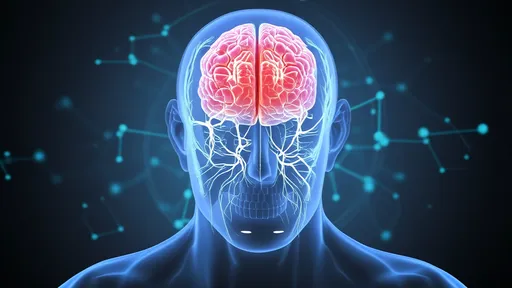
Deep within the genetic blueprint of every mammal lies a hidden legacy—fragments of ancient viral infections that occurred millions of years ago. These endogenous retroviruses (ERVs), once foreign invaders, have been co-opted by evolution to play a surprising role in shaping the complexity of the mammalian brain. Far from being mere "junk DNA," these viral remnants now appear to have acted as molecular sculptors, fine-tuning the developmental processes that give rise to our most sophisticated organ.
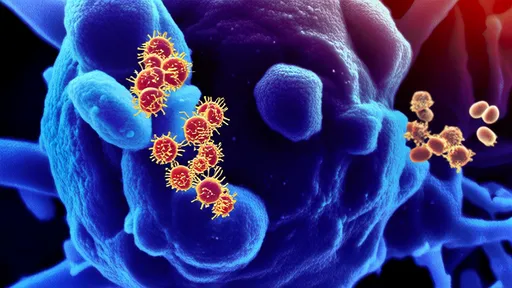
Recent research has unveiled how ERVs, which account for nearly 8% of the human genome, have been repurposed as regulatory elements during brain development. When retroviruses infect a host, they insert their genetic material into the host's DNA. Occasionally, these integrations occur in germ cells, allowing the viral sequence to be passed down through generations. Over evolutionary time, some of these sequences have been domesticated by the host genome, acquiring new functions that contribute to biological complexity.
The viral origins of synaptic plasticity
One of the most striking examples comes from studies of the Arc gene, essential for learning and memory. The Arc protein forms virus-like capsids that transfer RNA between neurons, a mechanism strikingly similar to how retroviruses operate. This discovery suggests that our brain's ability to form memories might literally have viral origins. The gene appears to have been co-opted from a retroviral ancestor approximately 350-400 million years ago, demonstrating how evolution can repurpose infectious elements into crucial cognitive components.
During embryonic development, certain ERVs become active precisely when neural stem cells begin differentiating into various brain cell types. Researchers have identified specific ERV-derived sequences that regulate the expression of nearby genes involved in neurogenesis. These viral remnants appear to function as enhancers—DNA sequences that can boost the expression of target genes—creating a complex regulatory network that guides proper brain formation.
ERVs and the cerebral cortex expansion
The dramatic expansion of the cerebral cortex in primates, particularly humans, may owe some debt to these viral elements. Comparative genomic studies reveal that many ERV insertions occurred at key evolutionary junctures when brain complexity increased. Some of these insertions provided novel regulatory sequences that potentially allowed for more sophisticated control of gene expression patterns during brain development.
One compelling case involves the HERV-H family of endogenous retroviruses, which shows unusual activity in human pluripotent stem cells. These sequences appear to help maintain stem cell pluripotency—a crucial factor in the prolonged cortical neurogenesis that characterizes human brain development. When researchers experimentally inhibited HERV-H expression, the stem cells differentiated prematurely, suggesting these viral remnants play an active role in timing human neurodevelopment.
The double-edged sword of viral domestication
While ERVs have contributed to brain evolution, their activity remains a delicate balance. The same mechanisms that allow beneficial regulation can also lead to neurological disorders when dysregulated. Abnormal ERV activation has been implicated in conditions ranging from schizophrenia to amyotrophic lateral sclerosis (ALS). This duality reflects the complex relationship between host and viral sequences—an evolutionary tango that has shaped mammalian brains while maintaining potential risks.
Modern techniques like single-cell RNA sequencing have revealed that ERV expression follows specific patterns during brain development, with different viral families activating in distinct neural cell types at precise developmental stages. This exquisite regulation suggests these elements have become deeply integrated into the genetic programs governing neurogenesis. Some researchers now propose that ERVs may have provided the raw genetic material for evolutionary experimentation, allowing rapid development of new regulatory networks that facilitated brain complexity.
Future directions in paleovirology
As scientists continue to explore this fascinating intersection of virology and neurobiology, new questions emerge about how many other brain-specific features might have viral origins. The discovery that viral sequences contribute to everything from placental development to immune regulation suggests we may have only scratched the surface of understanding our viral heritage. Current research is focusing on creating more precise evolutionary timelines of ERV integration events and their correlation with key innovations in brain structure and function.
This growing field challenges our traditional views of viruses as purely pathogenic entities. Instead, it paints a picture of viruses as potential partners in evolution—biological hackers whose invasive code sometimes gets rewritten into the operating system of life. The mammalian brain, with its unparalleled complexity, may represent the most striking example of this unexpected collaboration between host and virus, written into our DNA over millions of years of evolutionary history.
By /Aug 18, 2025
By /Aug 27, 2025

By /Aug 27, 2025
By /Aug 18, 2025
By /Aug 27, 2025
By /Aug 27, 2025
By /Aug 18, 2025

By /Aug 18, 2025
By /Aug 18, 2025
By /Aug 18, 2025
By /Aug 18, 2025
By /Aug 18, 2025
By /Aug 27, 2025
By /Aug 18, 2025
By /Aug 18, 2025

By /Aug 18, 2025
By /Aug 18, 2025
By /Aug 18, 2025

By /Aug 18, 2025
By /Aug 18, 2025