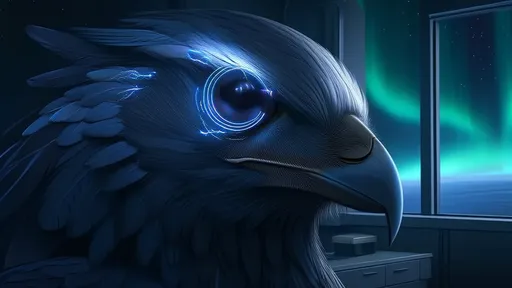
In the quiet predawn hours, as migratory birds begin their extraordinary journeys across continents, a biological marvel unfolds—one that has puzzled scientists for decades. How do these creatures navigate with such precision across thousands of miles, often without visual landmarks? The answer, it seems, lies not in conventional biology but in the elusive realm of quantum mechanics. At the heart of this phenomenon is a specialized protein called cryptochrome, which enables birds to perceive Earth’s magnetic field through a process known as the radical pair mechanism. This quantum-assisted magnetic compass represents one of nature’s most sophisticated adaptations, blurring the lines between biology and physics.
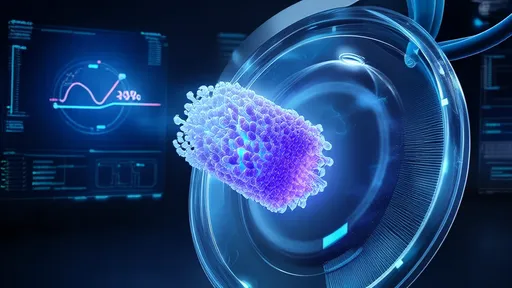
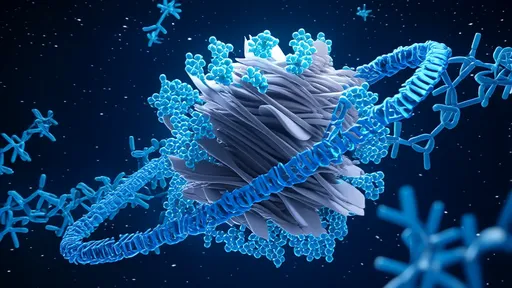
The cryptochrome protein, found in the retinas of birds, acts as a molecular sensor for magnetic fields. When light enters the eye, it excites electrons within cryptochrome, initiating a chain of quantum events. Specifically, light absorption promotes an electron to a higher energy state, creating a pair of radicals—molecules with unpaired electrons. These radicals exist in a quantum superposition of states, meaning they simultaneously embody multiple spin configurations. It is this delicate quantum coherence that allows the protein to act as a magnetic compass, sensitive to the faint geomagnetic field that envelops our planet.
What makes this mechanism so extraordinary is its reliance on quantum coherence—a state typically associated with highly controlled laboratory conditions, not warm, wet biological systems. Quantum coherence is fragile, easily disrupted by environmental noise and thermal vibrations. Yet, in birds, this coherence persists long enough to influence chemical reactions within cryptochrome, ultimately signaling magnetic direction to the brain. Researchers believe that the protein’s structure and cellular environment may protect these quantum states, allowing them to operate efficiently even at physiological temperatures. This discovery challenges long-held assumptions about the incompatibility of quantum phenomena with biological processes.
The radical pair mechanism hinges on the spin states of electrons, which are influenced by Earth’s magnetic field. Depending on the alignment of these spins, chemical reactions within cryptochrome proceed at different rates, creating a detectable signal that varies with direction. In essence, birds may "see" the magnetic field as visual patterns or intensity variations superimposed on their surroundings. This quantum-enabled perception provides a constant, reliable reference for navigation, whether during transcontinental migrations or local movements. Studies on European robins and other migratory species have demonstrated that disrupting cryptochrome function impairs their ability to orient magnetically, underscoring its critical role.
Recent experimental advances have brought us closer to confirming this quantum biological hypothesis. Spectroscopic techniques and genetic manipulations have allowed scientists to probe cryptochrome’s function in unprecedented detail. For instance, researchers have observed magnetic field-dependent responses in isolated cryptochrome proteins and in vivo systems, supporting the idea that quantum coherence facilitates magnetoreception. Moreover, synthetic models mimicking cryptochrome’s structure have replicated key aspects of the radical pair mechanism, reinforcing its plausibility. These findings not only illuminate avian navigation but also suggest that quantum effects may underpin other biological processes, from enzyme catalysis to olfactory sensing.
Despite progress, many questions remain. How exactly does cryptochrome maintain quantum coherence in a noisy cellular environment? What evolutionary steps led to the integration of quantum mechanics into avian biology? And could similar mechanisms exist in other species, including insects, mammals, or even humans? Some researchers speculate that cryptochromes in humans, though not used for magnetoreception, may still exhibit quantum behaviors influencing circadian rhythms or other functions. Unraveling these mysteries could revolutionize our understanding of biology’s quantum dimensions.
The implications of this research extend far beyond ornithology. If nature has harnessed quantum coherence for navigation, it might inspire breakthroughs in quantum technology, such as noiseless sensors or biomimetic computing systems. Furthermore, studying cryptochrome could inform efforts to develop quantum-enhanced materials that operate efficiently at room temperature—a longstanding challenge in quantum physics. This intersection of biology and quantum mechanics exemplifies how interdisciplinary science can yield profound insights, revealing that the boundaries between disciplines are often more permeable than they appear.
In the grand tapestry of migration, the quantum compass of birds stands as a testament to evolution’s ingenuity. It is a reminder that the natural world, in its complexity, often surpasses human innovation. As scientists continue to decode the secrets of cryptochrome, they not only uncover the mechanics of avian navigation but also glimpse a deeper truth: that quantum phenomena may be woven into the very fabric of life, guiding creatures great and small across the Earth and perhaps beyond.
By /Aug 18, 2025
By /Aug 27, 2025
By /Aug 27, 2025
By /Aug 18, 2025
By /Aug 27, 2025

By /Aug 27, 2025
By /Aug 18, 2025
By /Aug 18, 2025
By /Aug 18, 2025
By /Aug 18, 2025

By /Aug 18, 2025
By /Aug 18, 2025
By /Aug 27, 2025
By /Aug 18, 2025
By /Aug 18, 2025

By /Aug 18, 2025
By /Aug 18, 2025
By /Aug 18, 2025

By /Aug 18, 2025
By /Aug 18, 2025