In a groundbreaking move that signals the next evolutionary step for remote collaboration, Tencent Meeting has partnered with Yuanbao to introduce AI-powered meeting hosting capabilities. This strategic integration represents more than just another feature update—it fundamentally reimagines how distributed teams interact, collaborate, and maintain productivity across geographical boundaries.
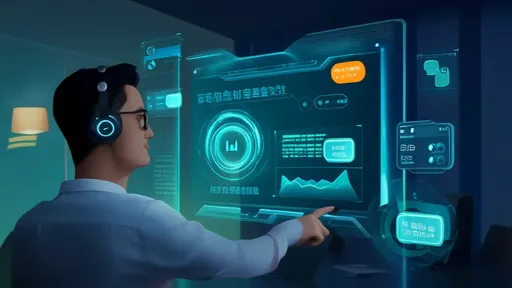
The new AI hosting functionality transforms Tencent Meeting from a passive communication tool into an active collaboration partner. Unlike conventional video conferencing platforms that merely facilitate connection, this intelligent system analyzes meeting content in real-time, identifies key discussion points, and automatically generates actionable summaries. The AI doesn't just record what's being said; it understands context, recognizes decisions, and tracks action items without human intervention.
What makes this development particularly remarkable is its timing. As organizations worldwide struggle with hybrid work models and meeting fatigue, the AI host offers a solution that reduces administrative burden while enhancing meeting effectiveness. Early beta testers report significant reductions in meeting duration and follow-up time, as the system automatically documents decisions and distributes summaries to participants immediately after sessions conclude.
The technology behind this innovation represents years of development in natural language processing and machine learning. Yuanbao's advanced AI algorithms can distinguish between casual conversation and substantive discussion, identify different speakers with remarkable accuracy, and even detect subtle nuances in tone that might indicate agreement, disagreement, or uncertainty. This sophisticated understanding allows the system to create more nuanced and useful meeting records than any human note-taker could produce.
Beyond mere transcription, the AI host actively contributes to meeting productivity. It can gently remind participants when discussions drift off-topic, suggest when key stakeholders haven't contributed to important decisions, and even recommend extending meeting time when complex topics require more thorough exploration. These interventions occur seamlessly, without disrupting the natural flow of conversation.
Privacy and security concerns, always paramount in collaborative technologies, have been addressed through sophisticated encryption and local processing options. Sensitive discussions can be analyzed directly on users' devices without ever transmitting data to external servers, ensuring that proprietary information remains protected while still benefiting from AI assistance.
The implementation reflects Tencent's broader vision of intelligent connectivity. Rather than creating isolated features, the company is building an ecosystem where AI enhances every aspect of digital interaction. This meeting host represents just one component of a comprehensive strategy to make remote collaboration not just equivalent to in-person interaction, but superior in specific, measurable ways.
Industry analysts have been quick to recognize the significance of this development. Dr. Evelyn Chen, a technology researcher at Hong Kong University, notes that "this isn't merely an incremental improvement—it's a paradigm shift. We're witnessing the transition from tools that enable remote work to systems that actively optimize it. The implications for global workforce productivity could be substantial."
Early adoption patterns suggest particular strength in cross-time-zone collaborations, where the AI host helps bridge not just geographical but temporal divides. Teams working across continents report that the automatically generated summaries and action items help maintain continuity despite limited overlapping working hours, effectively creating a persistent collaborative consciousness that transcends individual availability.
The technology also shows promise in addressing accessibility challenges. For participants with hearing impairments or those working in second languages, the real-time transcription and emphasis on visual documentation provide crucial support that makes meetings more inclusive. The system's ability to clarify ambiguous points and confirm understanding has proven particularly valuable in multicultural team environments.
Looking forward, Tencent has hinted at even more advanced capabilities in development. Future iterations may include predictive analytics that anticipate meeting outcomes based on discussion patterns, emotional intelligence features that help facilitators manage group dynamics, and even more sophisticated integration with project management tools to automatically update task trackers and calendars.
This development arrives at a critical juncture in the evolution of remote work. As organizations move beyond emergency remote arrangements toward deliberate, permanent distributed work models, tools that actively enhance rather than simply enable collaboration become increasingly essential. Tencent's AI meeting host represents a significant step toward making distributed collaboration not just viable but preferable for certain types of work.
The partnership between Tencent Meeting and Yuanbao also highlights the growing importance of strategic alliances in the technology sector. By combining Tencent's massive user base and distribution channels with Yuanbao's specialized AI expertise, the partners have achieved something neither could have accomplished independently. This collaborative approach to innovation may well become the standard model for future technological advancement.
As with any transformative technology, questions about appropriate use and potential over-reliance remain. Some experts caution against fully automated meetings, emphasizing the continued importance of human facilitation skills and emotional intelligence. The most effective implementations will likely blend artificial and human intelligence, using each where it provides maximum value.
What remains clear is that the genie cannot be put back in the bottle. The introduction of competent AI hosting in mainstream collaboration tools establishes a new benchmark for what professionals should expect from their meeting technology. As users experience the benefits of automated documentation, intelligent facilitation, and enhanced follow-through, demand for these capabilities will only grow.
The commercial implications are equally significant. While Tencent has not announced pricing for premium AI hosting features, the technology clearly creates new revenue opportunities while strengthening the company's competitive position in the increasingly crowded collaboration software market. Other platforms will undoubtedly rush to develop similar capabilities, accelerating innovation across the sector.
For now, Tencent Meeting users can look forward to more productive, less burdensome meetings. The AI host won't replace human participants, but it will fundamentally change their roles and responsibilities. Rather than dividing attention between participation and note-taking, meeting attendees can focus fully on contribution and collaboration, secure in the knowledge that the administrative aspects are being handled competently in the background.
This development represents more than just technological progress—it signals a cultural shift in how we conceptualize work itself. As intelligent systems increasingly handle routine administrative tasks, human workers can devote more energy to creative problem-solving, strategic thinking, and the interpersonal connections that ultimately drive innovation and growth. The future of work isn't just remote—it's intelligently augmented.

By /Sep 15, 2025

By /Sep 15, 2025

By /Sep 15, 2025

By /Sep 15, 2025

By /Sep 15, 2025
By /Sep 15, 2025

By /Sep 15, 2025
By /Sep 15, 2025

By /Sep 15, 2025

By /Sep 15, 2025

By /Sep 15, 2025

By /Sep 15, 2025

By /Sep 15, 2025

By /Sep 15, 2025

By /Sep 15, 2025

By /Sep 15, 2025

By /Sep 15, 2025

By /Sep 15, 2025
By /Sep 15, 2025

By /Sep 15, 2025