SpaceX has fundamentally transformed the landscape of human spaceflight, ushering in an era where missions to orbit are no longer rare, government-exclusive endeavors but regular, commercially-operated voyages. The company’s Crew Dragon spacecraft, developed under NASA’s Commercial Crew Program, has successfully transitioned from experimental flights to a reliable transportation system, ferrying astronauts and private citizens to the International Space Station with a regularity that was once unimaginable. This shift marks a pivotal moment in space exploration history, signaling the dawn of standardized commercial space transport.
The journey toward this new epoch began with rigorous testing and demonstration missions, but it was the sustained success of operational crew rotations that cemented SpaceX’s role as a leading space taxi service. Each launch, whether carrying NASA astronauts, international partner crew members, or private astronauts, follows a well-rehearsed sequence: from spacecraft processing and Falcon 9 booster integration to launch, docking, and return. This repeatable process underscores the maturation of the technology and operational protocols, turning what was once a high-risk adventure into a manageable, almost routine operation.
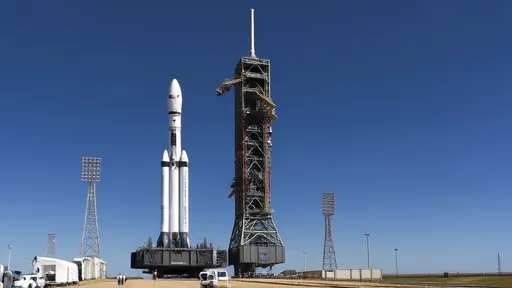
Central to this achievement is the Falcon 9 rocket, a workhorse designed with reusability as a core principle. The ability to recover and refurbish first-stage boosters has not only driven down costs but also increased launch tempo, enabling a flight rate that supports regular crewed missions. Similarly, the Crew Dragon capsule is reused across multiple flights, with components refurbished and systems requalified, mirroring practices long common in aviation but revolutionary for spaceflight. This reusability is a cornerstone of the business model, making frequent, affordable access to space a tangible reality.
Beyond government partnerships, SpaceX has aggressively pursued purely commercial opportunities, further demonstrating the viability of its standardized transport system. The Inspiration4 mission, which sent four private citizens on a multi-day orbital journey, and the Axiom Space missions, which transport private astronauts to the ISS, are prime examples. These flights are not one-off spectacles but part of a growing manifest of commercial missions, booked and flown much like charter flights. They prove that there is a market for human spaceflight beyond traditional government agencies, opening a new revenue stream and expanding the ecosystem of space-based commerce.
The operational tempo demanded by this new era requires an unprecedented focus on safety and reliability. Each Crew Dragon mission builds upon a wealth of data from previous flights, allowing engineers to continuously refine and improve the system. Pre-launch checkouts, in-flight anomaly resolution procedures, and post-splashdown analyses are all standardized, creating a feedback loop that enhances safety with every mission. This data-driven approach to continuous improvement is critical for maintaining public and regulatory confidence as flight rates increase.
This new paradigm of standardized transport has profound implications for the future of the International Space Station and the emerging commercial space station market. A reliable, frequent crew rotation service ensures a steady flow of personnel to and from orbit, which is essential for maximizing the scientific and commercial output of these facilities. It reduces the logistical burden on station operators and provides flexibility in crew composition, allowing for more specialized missions focused on research, manufacturing, or even tourism.
Looking ahead, the success of Crew Dragon serves as a powerful proof-of-concept for SpaceX’s next-generation spacecraft, Starship. Designed for deep space missions to the Moon and Mars, Starship embodies an even more ambitious vision of full and rapid reusability. The operational experience gained from the routine flight of Crew Dragon—managing launch operations, ground infrastructure, crew training, and mission support—provides an invaluable foundation for the vastly more complex challenges Starship will face. The processes and culture of standardization are directly transferable to this new vehicle.
In conclusion, SpaceX has not just built a spacecraft; it has established a new industry standard for human space transportation. By demonstrating that crewed flights can be conducted with the regularity and reliability of an airline service, the company has moved the entire sector forward. The era of commercial, standardized space transport is no longer a futuristic concept—it is the present reality, setting the stage for a future where humanity’s presence in space is continuous, expanding, and built upon a foundation of robust and repeatable commercial service.

By /Sep 15, 2025

By /Sep 15, 2025

By /Sep 15, 2025

By /Sep 15, 2025

By /Sep 15, 2025
By /Sep 15, 2025

By /Sep 15, 2025
By /Sep 15, 2025

By /Sep 15, 2025

By /Sep 15, 2025

By /Sep 15, 2025

By /Sep 15, 2025

By /Sep 15, 2025

By /Sep 15, 2025

By /Sep 15, 2025

By /Sep 15, 2025
By /Sep 15, 2025

By /Sep 15, 2025

By /Sep 15, 2025

By /Sep 15, 2025