Apple's strategic pivot toward artificial intelligence has become the tech world's worst-kept secret, yet the sheer scale of its ambition continues to surprise industry watchers. What began as a trickle of rumors about proprietary AI chips and software frameworks has swelled into a torrent of evidence pointing toward a comprehensive, hardware-driven ecosystem. The company appears to be methodically constructing an interconnected web of intelligent devices, aiming not merely to participate in the AI revolution but to redefine its architecture around user-centric, on-device processing. This isn't about chasing trends; it's about executing a long-game vision where AI becomes the invisible, indispensable fabric of the Apple experience.
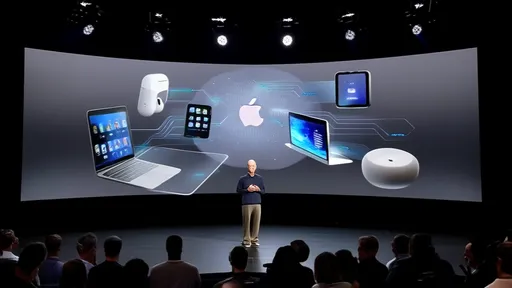
Central to this endeavor is the silicon that powers it. Apple's transition from Intel processors to its own M-series chips for Macs was a masterstroke that laid the necessary groundwork. These chips, with their unified memory architecture and powerful Neural Engines, were never just about raw performance for creative tasks. They were the foundational building blocks for a new kind of computing—one where machine learning tasks can be handled efficiently and privately on the device itself. The latest iterations of these chips boast dedicated AI accelerators capable of performing trillions of operations per second, making previously cloud-dependent AI features not only possible but instantaneous and secure. This hardware-level investment is the bedrock upon which everything else is built.
The hardware pipeline, as revealed through a combination of controlled leaks, patent filings, and supply chain intelligence, paints a picture of a deeply integrated future. We're looking at more than just iterative updates to existing product lines. Prototypes and code references suggest a new category of device is on the horizon: a mixed-reality headset that serves as the ultimate AI canvas. This device, rumored to be equipped with a dozen-plus cameras and sensors, is designed to perceive and understand the world in real-time, overlaying contextual information and intelligent assistance onto the user's field of view. It’s envisioned as the command center for the personal AI ecosystem.
Beyond the headset, the humble AirPods are being groomed for a more intelligent role. Future models are expected to incorporate advanced biometric sensors for health monitoring—not just heart rate, but potentially blood oxygen levels and even body temperature. More intriguingly, they are being tested for sophisticated hearing aid functionalities, using AI to amplify important sounds like conversations while dampening background noise. This transforms them from audio accessories into health and accessibility devices, gathering a continuous stream of personalized data that feeds the larger AI health platform.
The HomePod, too, is being reimagined. The next generation is speculated to include a screen and a built-in camera, morphing from a simple speaker into a home hub that can recognize individuals, provide visual responses to queries, and even function as a fitness coach by observing form during workouts. It would act as the stationary anchor of the AI ecosystem within the home, coordinating with other devices. For instance, your car's AI could notify the home hub of your ETA, prompting it to adjust the thermostat and lighting, while your watch confirms you're stressed from traffic, suggesting the hub play calming music upon your arrival.
This leads to the most critical aspect of Apple's strategy: the scene closure. The ultimate goal is to create a seamless flow of intelligence across every device a user owns, from the moment they wake up to the time they go to sleep. Imagine your Watch detecting subtle changes in your sleep patterns and blood oxygen levels overnight. It silently shares this encrypted data with your iPhone. As you wake up, the Health app on your phone provides a brief analysis, suggesting a slightly less intense workout. During your breakfast, the HomePod, aware of your schedule, reminds you of your first meeting and summarizes your calendar.
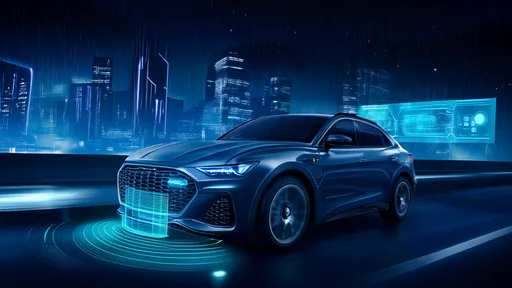
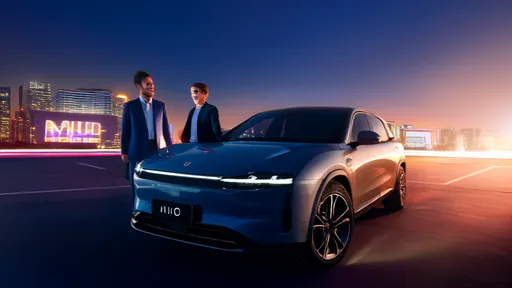
Your drive to work is enhanced by AI in CarPlay, which now offers predictive navigation, warning you of delays before you even encounter them and suggesting alternative routes. It reads out and allows you to dictate responses to urgent messages, all processed on-device for privacy. At the office, your Mac and iPad work in concert, using Handoff and Universal Control not just to share files, but to share context. An AI-powered writing assistant started on your iPhone can be seamlessly picked up on your Mac, with all its suggestions and learned preferences intact.
The mixed-reality headset then becomes the pinnacle of this integration. In a design meeting, it could project 3D models for colleagues to examine, translating gestures and commands into edits. For a doctor, it could overlay a patient's medical history and real-time vitals from their Apple Watch during a consultation. The AI doesn't just perform individual tasks; it understands the scene—the who, what, where, and when—to deliver the right information at the right time on the right device.
Privacy remains the non-negotiable cornerstone of this entire architecture. Apple's relentless focus on on-device processing is a stark contrast to the data-hungry models of many competitors. By designing systems where the most sensitive data never leaves the user's hardware, Apple is betting that consumers will prioritize trust and security as AI becomes more pervasive. This is a competitive moat as much as it is a philosophical stance. The company is developing techniques like federated learning, where AI models improve by learning from patterns across millions of devices without ever collecting individual user data. This allows the ecosystem to get smarter collectively while remaining private individually.
The implications for developers are profound. Apple's AI frameworks—Core ML and Create ML—are being aggressively expanded to empower third-party apps to leverage this hardware ecosystem. The vision is for a million apps to become inherently intelligent, all benefiting from the dedicated Neural Engine in every modern Apple device. A fitness app can provide real-time running form analysis using the Watch's sensors. A photography app can offer stunning enhancements powered by the iPhone's silicon. A language learning app can use the AirPods' microphones for instant, private pronunciation feedback. The hardware ecosystem becomes a platform for innovation.
Of course, immense challenges loom. Can Apple's on-device AI models truly compete with the sheer scale and power of cloud-based giants like Google and OpenAI? Will consumers embrace wearing more devices, like a headset, to complete this scene closure? And can the company maintain its infamous polish and simplicity while the underlying technology becomes exponentially more complex? The race is not just about who has the best algorithms, but who can most elegantly weave those algorithms into the fabric of daily life without compromising user trust.
Apple's move is a bold declaration that the future of AI is not in the cloud, but in your pocket, on your wrist, in your ears, and on your face. It is a bet on a distributed, personal, and private intelligence that serves the individual rather than the corporation. By building a closed-loop ecosystem of intelligent hardware, Apple isn't just creating products; it's cultivating a context-aware environment that anticipates needs and operates intuitively. The success of this vision will depend on its execution, but one thing is clear: the age of ambient, integrated AI is dawning, and Apple is assembling the pieces to bring it into focus.

By /Sep 15, 2025

By /Sep 15, 2025

By /Sep 15, 2025
By /Sep 15, 2025

By /Sep 15, 2025
By /Sep 15, 2025

By /Sep 15, 2025
By /Sep 15, 2025

By /Sep 15, 2025

By /Sep 15, 2025

By /Sep 15, 2025
By /Sep 15, 2025

By /Sep 15, 2025

By /Sep 15, 2025
By /Sep 15, 2025

By /Sep 15, 2025

By /Sep 15, 2025
By /Sep 15, 2025

By /Sep 15, 2025
By /Sep 15, 2025