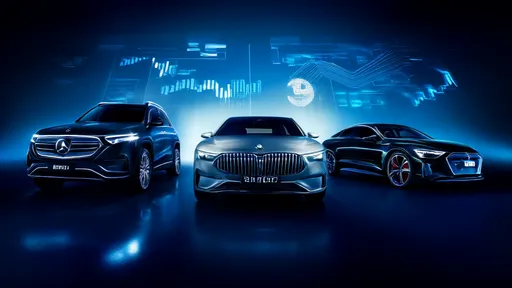
German luxury car giants BMW, Mercedes-Benz, and Audi are grappling with shrinking profit margins as the costly transition to electric vehicles accelerates across the industry. The financial strain is becoming increasingly evident in their latest quarterly reports, signaling a challenging phase for automakers long accustomed to robust returns from their premium combustion-engine models.
BMW Group recently reported an operating margin of 8.8% in its automotive segment, down from 11.3% a year earlier. The Munich-based manufacturer attributed the decline to higher manufacturing costs, increased research and development expenditures, and unfavorable currency effects. Despite achieving solid sales figures, the company acknowledged that its electrification strategy is weighing heavily on short-term profitability.
Mercedes-Benz experienced similar pressures, with its adjusted return on sales sliding to 12.6% from 14.5% in the previous year. The Stuttgart-based automaker highlighted substantial investments in its electric vehicle architecture and software development as primary factors impacting earnings. Company executives emphasized that while demand for their electric models continues to grow, production costs remain significantly higher than for conventional vehicles.
Audi, Volkswagen Group's premium brand, faced the most pronounced challenges with its operating profit margin dropping to 7.5% from 10.7%. The Ingolstadt-based manufacturer cited intense competition in the Chinese market and supply chain disruptions as additional headwinds compounding the financial burden of its electric transformation. Audi's ambitious roadmap includes launching more than 20 new electric models by 2026, requiring substantial capital allocation to development and production facilities.
The automotive industry's shift toward electrification demands unprecedented investment in new technologies, manufacturing processes, and workforce training. Developing dedicated electric platforms, securing battery supplies, and establishing charging infrastructure require billions in capital expenditure that cannot be immediately recovered through vehicle sales. This financial pressure comes at a time when automakers are also dealing with inflationary pressures on raw materials and energy costs.
Battery costs represent perhaps the most significant financial hurdle. While prices have decreased substantially over the past decade, premium electric vehicles still require expensive battery packs that account for 30-40% of the total vehicle cost. German manufacturers, known for their performance and quality standards, are particularly affected as they insist on high-energy-density batteries to maintain driving range comparable to their combustion engines.
Software development has emerged as another major cost center. The industry's transition from hardware-focused manufacturing to software-defined vehicles requires entirely new capabilities and talent acquisition. German automakers are investing heavily in developing their operating systems and digital ecosystems, areas where they traditionally lacked expertise compared to technology companies.
The competitive landscape is further complicating the profitability equation. Tesla's continued growth and the emergence of Chinese electric vehicle manufacturers are putting additional pressure on pricing. Established premium brands can no longer rely solely on their heritage and must compete on technology, performance, and innovation in the electric segment where newcomers have established strong positions.
Despite these challenges, German automakers remain committed to their electric futures. BMW continues to roll out its "Neue Klasse" platform specifically designed for electric vehicles. Mercedes-Benz is progressing with its "Electric First" strategy, aiming to go all-electric by the end of the decade where market conditions allow. Audi is accelerating its transformation through the Artemis project, developing advanced electric vehicles with highly automated driving capabilities.
Industry analysts suggest that the current profit compression represents a necessary transition phase rather than a permanent deterioration. As electric vehicle production scales and technology matures, manufacturers expect to achieve better economies of scale and gradually improve profitability. However, most acknowledge that the industry may never return to the exceptionally high margins enjoyed during the peak of combustion engine dominance.
The German luxury automakers' experience reflects broader industry trends, but their premium positioning provides some advantages. Higher price points allow for better absorption of additional costs, and their established customer base shows willingness to pay premium prices for electric models that maintain brand values of performance, luxury, and innovation.
Supply chain localization is becoming a critical strategy for cost management. All three German manufacturers are establishing battery production facilities closer to their assembly plants to reduce logistics expenses and qualify for government incentives. BMW is building battery facilities in Germany, China, and the United States, while Mercedes-Benz and Audi are pursuing similar regional strategies.
The used car market for electric vehicles is developing more slowly than anticipated, creating additional pressure on residual values that affects leasing business models. German automakers are addressing this through guaranteed buy-back programs and efforts to demonstrate the longevity and reliability of their electric vehicles.
Looking ahead, the industry's profitability recovery will depend on several factors: continued reduction in battery costs, improvement in production efficiency, successful implementation of software monetization strategies, and stabilization of raw material prices. The transition period requires careful balancing of investment needs with financial sustainability.
German automakers are exploring new revenue streams to offset declining hardware margins. Mercedes-Benz is developing subscription services for enhanced performance and autonomous driving features. BMW is investing in digital services connected to its vehicles, while Audi is focusing on mobility solutions and energy management systems.
The coming years will test the resilience of these automotive giants as they navigate the most significant transformation in the industry's history. Their ability to maintain technological leadership while managing financial performance will determine their position in the new automotive landscape. The current profit pressures, while concerning to investors, represent necessary growing pains in the evolution toward sustainable mobility.
As the industry continues its electric transformation, manufacturers are learning that success requires not just developing compelling electric vehicles, but doing so in a financially sustainable manner. The German luxury automakers, with their engineering prowess and brand strength, remain well positioned to eventually emerge stronger from this transitional phase, but the road ahead remains challenging and capital-intensive.
By /Sep 15, 2025

By /Sep 15, 2025

By /Sep 15, 2025
By /Sep 15, 2025

By /Sep 15, 2025
By /Sep 15, 2025

By /Sep 15, 2025
By /Sep 15, 2025

By /Sep 15, 2025

By /Sep 15, 2025

By /Sep 15, 2025
By /Sep 15, 2025

By /Sep 15, 2025

By /Sep 15, 2025
By /Sep 15, 2025

By /Sep 15, 2025

By /Sep 15, 2025

By /Sep 15, 2025

By /Sep 15, 2025
By /Sep 15, 2025